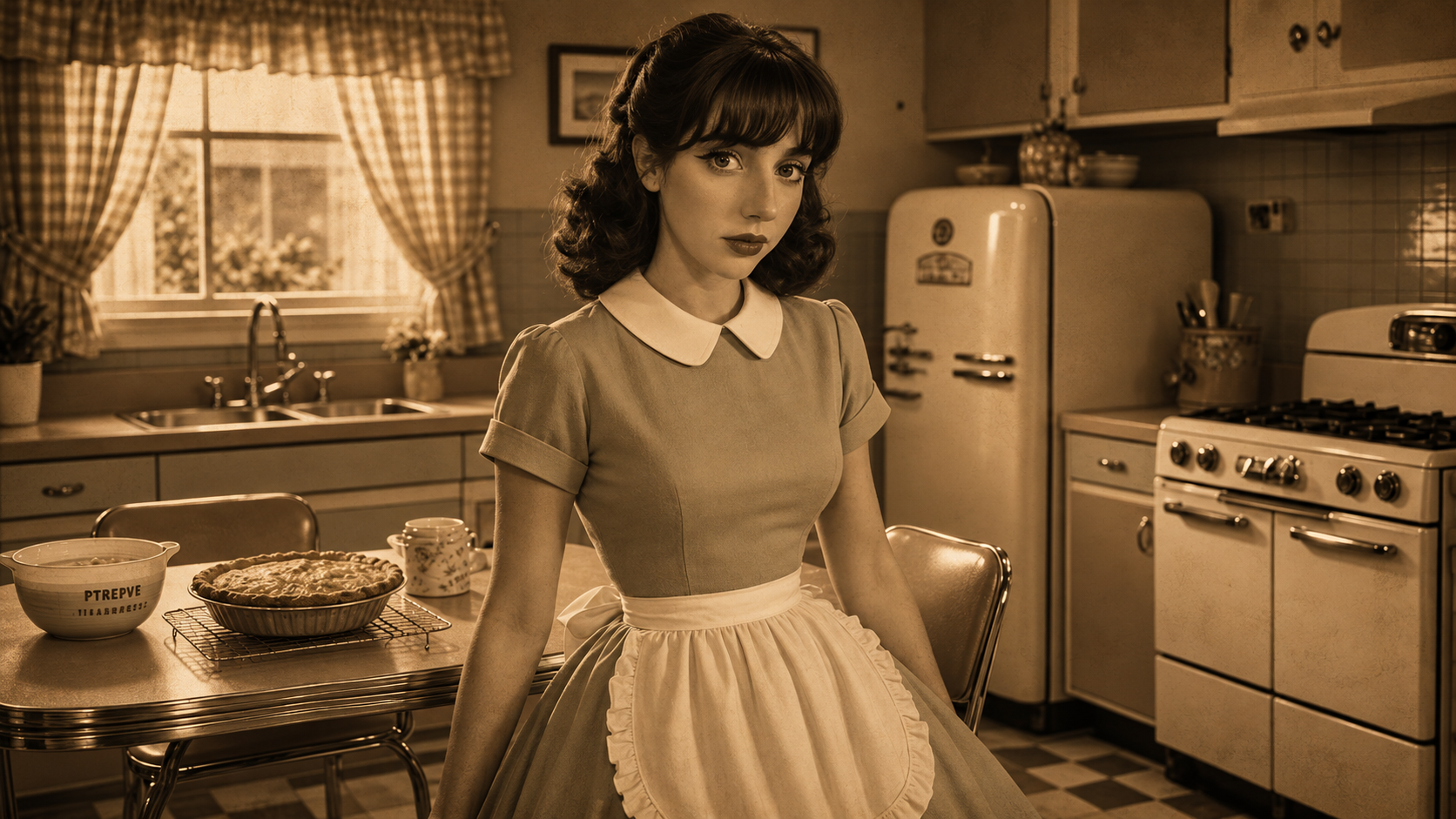
The question is not an internet troll. It is an observation. Traditional femininity is not a costume nor a cage. So, why do feminists act like it is?
They aren’t feminine!
It is the visible beauty of being female: a body built for a different kind of strength, a face and form that display youth and fertility, a temperament that can make a house feel like a refuge, a voice that soothes the children, a willingness to receive care from a good husband and to give care in return. That package is incompatible with the feminism that spread around the world like a fierce cancer.
Traditionalism is anti-feminist because later feminism defined itself against those very goods. A woman who wants to stay home, look very pretty, cook delicious food, clean every day, raise children, and be protected by an honest husband is not “empowering” under the current rules. This woman is the problem the feminist ideology has spent sixty years trying to beat out of existence.
First-wave feminism, from the mid-nineteenth century through 1920, fought for legal personhood: property, contracts, the vote. Even then it was not the will of most women. A large, organized, mostly female anti-suffrage movement existed for decades. The National Association Opposed to Woman Suffrage and its state chapters counted hundreds of thousands of members.
Carrie Chapman Catt, a leading suffragist, estimated around the Nineteenth Amendment that only about a third of women wanted the vote, a third opposed it, and the rest did not care. Anti-suffrage women were not arguing that females were simply too stupid. They argued from separate perspectives that no feminist today even knows about.
Men already carried protection, public combat, and the ugly work of politics and juries. Women already carried major moral influence through home, church, and reform. The ballot, they said, would drag them into strife, expose them to criminal testimony no normal woman wanted to hear, and plant partisan war inside the marriage. The internet would be their worst nightmare!
It risked trading the privileges of being supported and sheltered for a thinner kind of power they believed they already exercised better through counsel than command.
That was not a small aesthetic preference. It was a theory of how Western civilization stays livable. Public life, on this view, is abrasive by nature. Elections produce enemies. Legislatures reward the thick-skinned. Juries force citizens to sit through rape, murder, and the rest of the catalogue of human rot. Anti-suffrage women thought a healthy society assigned that burden to men not because women lacked brains, but because dragging wives and mothers into it would coarsen the sex that was supposed to keep the private world humane. Imagine that!
They believed femininity was a public good. If women became combatants in the same arena as men, they would lose the thing that made their influence distinctive. They were right.
The home would become another campaign office. Children would grow up inside adult bitterness. The “special privileges” they named, such as being provided for and spared conscription and the worst civic dirt, were not charity.
Later waves treated that entire bargain as a con. Femininity stopped being a good to be guarded and became the original false consciousness or the smile that hid the cage and the apron that proved you had not yet been liberated. Once that inversion stuck, every later wave had a license to treat traditional womanhood as the enemy rather than the inheritance.
Second-wave feminism in the 1960s through the 1980s made the home the enemy. Betty Friedan’s ‘The Feminine Mystique’ taught that domestic life was a trap. Radical writers and groups went further. Kate Millett called the family patriarchy’s chief institution. Activists picketed marriage-license offices and called the marriage contract slavery.
Some treated heterosexual family life as the engine of oppression and floated separatism, political lesbianism, or the abolition of the nuclear family. No-fault divorce, the sexual revolution, and the normalization of abortion changed the price of leaving and the price of staying whether or not every feminist wanted collapsing marriage and falling births, the incentives moved that way.
Third-wave feminism in the 1990s made identity and performance the center. Gender was no longer a sexed reality with two complementary patterns. It became a continuum you could assemble. Femininity could be “reclaimed” as irony, as riot, as lipstick over a clenched fist.
Intersectionality and Judith Butler’s account of gender as repeated acts loosened the last remaining tie between woman and female body.
Fourth-wave feminism, from the early 2010s, took that online. Hashtags, call-outs, #MeToo, body politics, and institutional capture made the movement faster and more punitive. Sex was increasingly described as “assigned.” Womanhood became a feeling plus a set of surgeries, pronouns, and aesthetic signals.
A contested fifth wave in the 2020s has only pushed the same logic further: digital purity tests, the insistence that men can be women if they say so, natalism treated as reactionary, and female biology either medicalized, displayed as protest, or treated as an inconvenience to be edited.
Most historians still stop at four waves. The fifth is the name people give when the fourth wave’s premises are applied without remaining shame. Whenever that last stretch is named out loud, a familiar dodge appears. People try to shove it to the side as “woke one,” as if gender ideology, the erasure of sex, the hostility to ordinary family life, and the ritual humiliation of dissent were a fad that landed on feminism from Twitter rather than the place the later waves were already going.
Calling it “woke one” is a way to keep the brand and disown the wreckage. Older liberals and some second-wave veterans use the word like a quarantine tape: real feminism was jobs and the vote; this other thing is campus madness. That is historically false.
The claim that woman is a social role rather than a sex, that the family is a political prison, that biology is optional until it is useful as an excuse, did not begin with a hashtag. Woke is not an alien parasite. It is the late style of the same project, with better distribution. Treating it as a detachable embarrassment lets institutions keep the moral halo of “feminism” while they rewrite bathrooms, sports, language, and childhood.
It also lets critics be dismissed as culture-war cranks chasing a trend instead of people pointing at the destination. That is why traditional feminine women and non-traditional feminists cannot share a house. One group treats being female as a gift with a shape: smaller on average, more oriented to infants, more invested in beauty and atmosphere, more dependent in some seasons and more indispensable in others. The other group treats that shape as the original injustice.
If men and women are the same except for socialization, then a woman who wants a provider, a pretty home, and children she raises herself is volunteering for subordination. If gender is a costume, then the woman who leans into softness, dresses, cooking, and motherhood is performing the stereotype the movement exists to smash. The two views cannot both be true. One of them has to call the other a traitor.
They also do not represent the same thing when they use the word woman. Traditional feminine women represent the beauty of being female in the ordinary sense: skin, hips, voice, care, the quiet competence of a well-run house, the knowledge that they are not men and do not need to be. The feminism that now dominates campuses, HR departments, and social media represents something else.
It represents refusal. The people who practice free bleeding treat natural beauty not as a basic female process but a public performance instead of something managed with dignity.
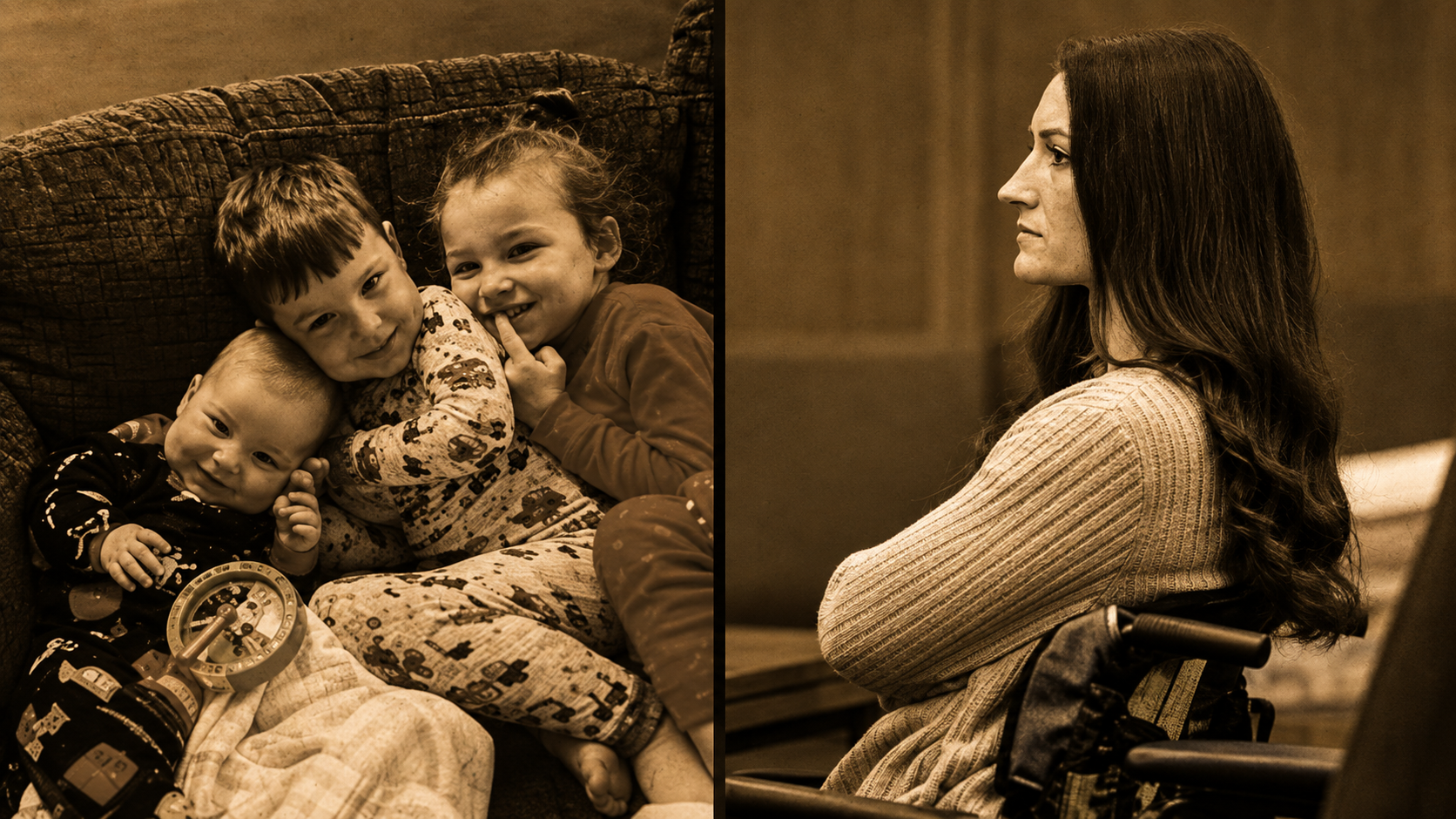
The defense of Lindsay Clancy treats a mother who strangled her three children as a symbol of female suffering whose biology or “the system” should cancel moral agency, the exact claim earlier feminists said they were escaping.
Widespread cosmetic work sits next to the claim that beauty standards are violence. Men step into the category “woman” with hormones and surgery because the category has been emptied of sex and filled with signals. None of that is the beauty of being female. It is the politicization of the female.
Plenty of women never bought it. They know they will never be interchangeable with men. They want a beautiful life with an honest, capable man who takes care of them while they take care of the home and the children.
They want to cook and clean without being told those acts are unpaid labor in a prison. They want to raise kids without being told motherhood is a trap or a “choice” no serious woman should choose. That life is not available inside a movement that has spent wave after wave teaching that difference is hierarchy, family is a site of oppression, and femininity is either a cage or an internet LARP.
So, those women drop the label. Feminists are not feminine because the later waves made femininity the thing you have to betray in order to qualify.