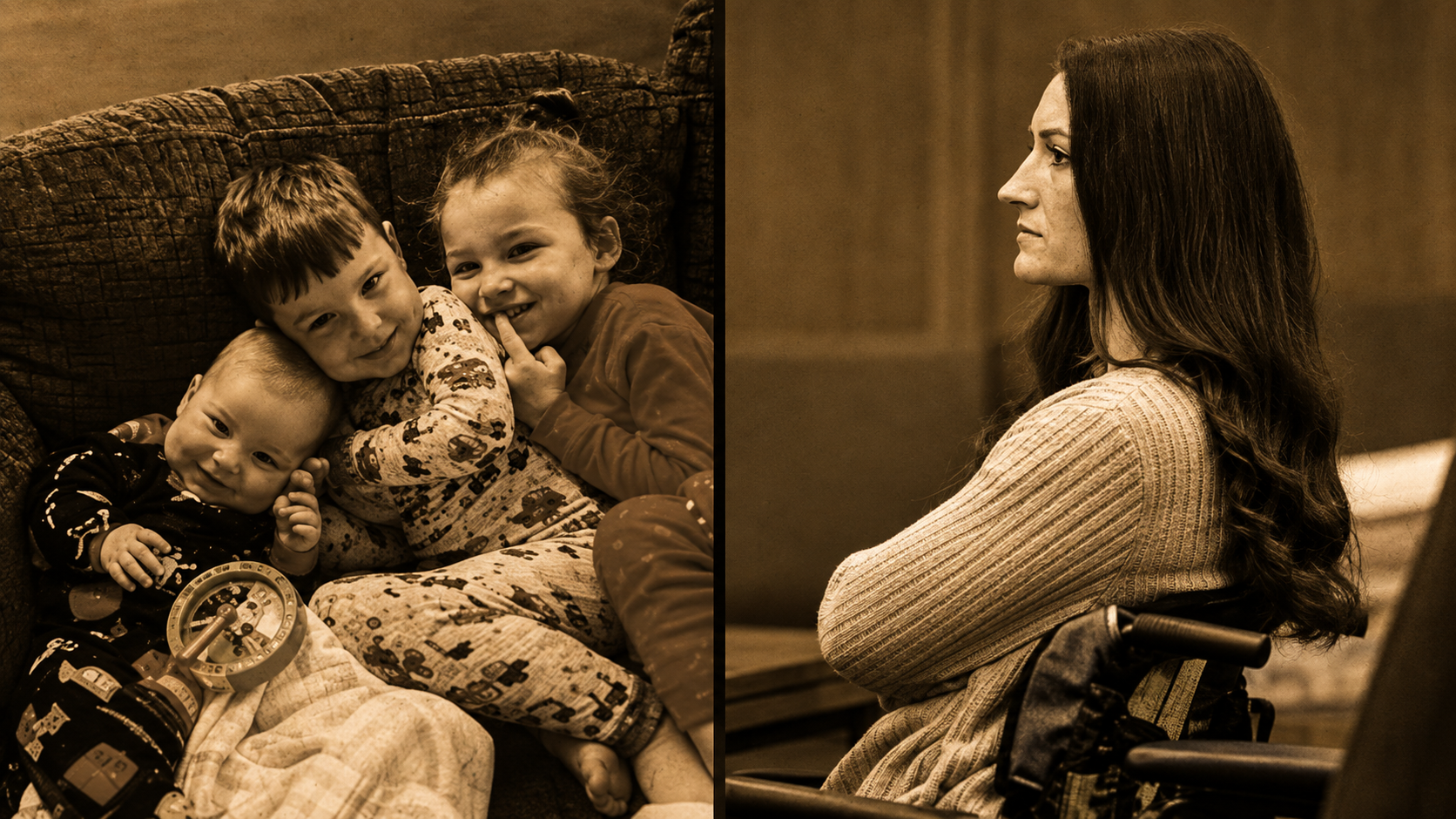
For most Americans, Joseph Maldonado-Passage—better known as Joe Exotic—is synonymous with Netflix’s Tiger King. Long after the cameras stopped rolling, however, a dedicated network of supporters continues working behind the scenes to secure executive clemency for the former Oklahoma zoo owner.
Their focus has shifted from the spectacle that made Joe a household name to his declining health, the conditions of his confinement and disputed evidence his supporters believe deserves a serious review.
That effort has taken on new urgency following Joe’s transfer from Federal Medical Center Fort Worth to Federal Medical Center Lexington in Kentucky. The move was communicated to me by well-known advocate Tom Wolf and confirmed through Maldonado’s official social-media account on July 17, 2026. This transfer was further reported on by Kentucky news outlets.
As of the publication of this report, the Bureau of Prisons has not publicly explained the reason for the transfer. Both institutions are federal medical centers, but the move itself does not confirm a particular medical development. Recent reports list Maldonado’s projected release year as 2036, although federal release calculations may change.
Before the transfer, Wolf reported to Leftover News that Maldonado had spent nearly 100 days in the prison’s Special Housing Unit, commonly known as the SHU or segregation. Drawing from Joe’s letters and telephone calls, Wolf said the experience had taken a significant physical and psychological toll.
“From what he’s written and told me on the phone, it’s been hard on him in ways that are tough to read.”
Wolf said Maldonado described wearing the same clothing for weeks while lacking access to basic hygiene supplies.
“He [Joe Maldonado] describes being in the same clothing for weeks at a time, going without basic hygiene items—no comb, no proper way to keep clean—and significant weight loss over these months.”
Supporters also say the psychological effects of prolonged isolation became increasingly apparent as Maldonado’s time in segregation continued.
According to Wolf, Maldonado believes his placement in the SHU was retaliation for the public attention surrounding his case and the scrutiny directed toward the facility where he was incarcerated.
These allegations have not been independently confirmed by the Bureau of Prisons. According to Wolf, Maldonado was then released from SHU just before his transfer. The clemency campaign is unfolding after Maldonado exhausted his latest effort to obtain a new trial.
Maldonado was convicted in 2019 of two federal murder-for-hire counts, eight Lacey Act counts involving wildlife records and nine Endangered Species Act counts and originally received a 264-month sentence.
After the Tenth Circuit ruled that the two murder-for-hire counts should have been grouped for sentencing purposes, the district court resentenced him to 252 months, which adds up to 21 years.
In July 2025, the Tenth Circuit upheld the denial of Joe’s motion for a new trial. His attorneys argued that post-trial statements from important prosecution witnesses, alleged undisclosed inducements and questions surrounding the examination of the five dead tigers collectively undermined confidence in the verdict.
Among the most significant allegations were post-trial statements involving prosecution witnesses Allen Glover and James Garretson. The district court found the later accounts unreliable or insufficiently material. The Tenth Circuit concluded that the judge could make those determinations from the written record without conducting a live evidentiary hearing.
Maldonado’s attorneys also raised questions about the condition of the five tigers he was convicted of killing. Former zoo manager John Reinke reportedly said the animals were sick. Maldonado’s attorneys argued that investigators examined the animals’ severed heads but did not perform complete autopsies that might have documented their health.
The appellate court did not find that evidence sufficient to justify a new trial. It reasoned, in part, that evidence showing the tigers were sick would not necessarily have changed the outcome because Maldonado allegedly admitted departing from the veterinarian’s established euthanasia protocol.
According to interviews conducted between Maldonado and Leftover News founder Kim Coulter, Maldonado expressed that he did in fact follow established procedures laid out by a veterinarian for putting down tigers.
Maldonado’s attorneys additionally argued that the new evidence supported an entrapment theory. The Tenth Circuit did not decide whether that theory was factually persuasive. Instead, it concluded that the argument had not been properly preserved in the district court.
Maldonado then petitioned the U.S. Supreme Court. The petition asked the justices to review whether the trial court should have held an evidentiary hearing concerning the post-trial witness statements, whether the alleged suppressed evidence should have been evaluated cumulatively under Brady v. Maryland, and whether procedural rules were improperly used to avoid reviewing portions of his claim.
The Supreme Court denied the petition on March 30, 2026, without issuing an opinion. That denial did not constitute a new trial, a reexamination of witnesses or a ruling declaring that every allegation raised by Maldonado’s attorneys was false. It meant that the Supreme Court declined to review the lower court’s decision.
The practical result, however, is that Maldonado’s convictions and 21-year sentence remain in place. With this particular appellate route effectively exhausted, presidential clemency is the most direct remaining avenue capable of producing his immediate release.
No public announcement confirms that President Donald Trump has made a decision in the case. Wolf reported to Leftover News that supporters have likewise received no confirmation that clemency is imminent.
“I’ve seen the talk about his name maybe being on an upcoming list, but I can’t confirm any of it, so I’m holding off on putting faith in any specific date.”
On July 10, 2026, the Justice Department published large lists of pardon and commutation applications denied by President Trump. Searches of both lists show neither “Maldonado” nor “Passage.”
Maldonado’s absence from those lists does not mean clemency is imminent. It does mean there is no basis for claiming his request was included in the July 10 denial batch.
Wolf has urged supporters to remain focused on confirmed information rather than internet speculation.
“Critically, Joe is not among the names that have surfaced in that reporting. I wouldn’t tie anything to that rumor—it doesn’t name Joe and may not materialize.”
A commutation could shorten Maldonado’s sentence or permit his release while leaving his convictions intact. A pardon would grant executive forgiveness for the federal offenses, although it would not constitute a judicial finding of factual innocence.
Maldonado’s history of prostate cancer is established. The condition was announced in 2021 after a biopsy had revealed an aggressive form of prostate cancer. Maldonado’s diagnosis and medical condition were subsequently discussed during his resentencing proceedings.
Maldonado’s transfer to another federal medical center confirms that the Bureau of Prisons continues to house him in a medical setting. It does not independently establish the current stage of his illness or the reason for his transfer.
Rather than waiting for another development in Washington, supporters are attempting to build a coordinated campaign around two demands: a fair review of Joe’s clemency request and legitimate scrutiny of his reported treatment in federal custody.
“I think the strongest thing is for all of us to pull in the same direction—a fair, serious review of his clemency petition, and real scrutiny of his conditions through legitimate channels,” Wolf expressed in his correspondence with Leftover News.
Supporters can take concrete action through lawful, accurate and respectful advocacy. Messages should focus on a fair clemency review, Joe’s health and humane conditions of confinement.
1. Contact President Trump
Supporters can ask President Trump to personally review Joe’s case and consider granting a pardon or commuting his remaining sentence.
Online: White House contact form
Select “Contact the President.”
By mail:
President Donald J. Trump
The White House
1600 Pennsylvania Avenue NW
Washington, DC 20500
The online form and mailing address are confirmed on the White House’s official contact page.
Sample message:
I respectfully ask President Trump to personally review the clemency request of Joseph Maldonado-Passage, also known as Joe Exotic, BOP Register No. 26154-017. Please consider his serious health concerns, the disputed post-trial evidence presented by his attorneys and the amount of time he has already served. I support a fair and prompt review of his request for a pardon or commutation.
Personalized messages are more credible than mass-produced submissions. Supporters should avoid threats, insults and factual claims they cannot substantiate.
2. Contact the Office of the Pardon Attorney
The Justice Department’s Office of the Pardon Attorney assists with federal clemency matters.
Email: USPardon.Attorney@usdoj.gov
Phone: 202-616-6070
By mail:
U.S. Department of Justice
Office of the Pardon Attorney
950 Pennsylvania Avenue NW
Washington, DC 20530
The office identifies email as its preferred method of contact and asks that attachments be submitted as PDF files.
Messages should identify Joe using his full committed name and BOP number:
Joseph Maldonado-Passage, Register No. 26154-017
Supporters may request fair and timely consideration, but the office may not disclose confidential information about its internal review.
The public can also use the Justice Department’s clemency case-status search.
3. Contact Members of Congress
Members of Congress cannot issue pardons, but they can contact the White House, request information from federal agencies and raise concerns about conditions within the Bureau of Prisons.
Supporters can locate their senators and representative through the official USA.gov elected-official directory.
The U.S. Capitol switchboard can connect callers to House and Senate offices:
202-224-3121
Sample message:
Please ask the White House to provide Joseph Maldonado-Passage’s clemency request with a fair and timely review. I also ask your office to seek information from the Bureau of Prisons concerning his reported prolonged placement in restrictive housing, access to hygiene supplies and continuity of medical care during his transfer to FMC Lexington.
Supporters should generally contact their own representatives because congressional offices prioritize constituents.
4. Write Directly to Joe
Supporters can send personal correspondence to Joe at his new facility:
Joseph Maldonado-Passage, Reg. No. 26154-017
FMC Lexington
Federal Medical Center
P.O. Box 14500
Lexington, KY 40512
The Bureau of Prisons instructs writers to include an inmate’s full committed name and register number on correspondence. Its FMC Lexington page should be checked before sending photographs, publications, packages or other materials because federal prisons impose restrictions on incoming mail.[15]
Personal letters serve a different purpose from government advocacy. They allow supporters to offer encouragement and help a prisoner maintain contact with the outside world.
5. Share Verified Information
Supporters can keep Joe’s case in the public eye by sharing court records, interviews and confirmed developments instead of repeating unverified pardon rumors.
Useful records include:
- The Tenth Circuit’s July 2025 opinion;
- Joe’s Supreme Court petition;
- The Supreme Court docket;
- The DOJ clemency case-status search;
- The Bureau of Prisons’ FMC Lexington information page;
- The DOJ’s published clemency-denial records.
Independent reporting should clearly distinguish among established facts, legal arguments and statements made by Joe or his advocates.
Wolf believes a consistent message is essential to keeping the campaign moving forward.
“If you’ve got reach, the most powerful thing you can do is amplify that same two-part message—consistency is what gives this weight.”
For Joe’s supporters, the mission remains unchanged despite years of legal setbacks: continue raising awareness, demand humane treatment, press for a serious executive review and ensure Joseph Maldonado-Passage is not forgotten while he remains behind bars.